

The Holy Trinity
More delicious, together?

Also available on Hudin.com to Personal & Commercial subscribers.
While on a trip to Porto and the Douro recently, a colleague and I started talking about “field blends” and I admitted that I find the mystique given to them to be a bit, how shall we say… ‘bullshit’.
It’s often part of the branding at many wineries that, if they have an old vineyard, they’ll upsell the aspect that they pick all the grapes together and ferment the one as one, singular, beautiful wine. The idea being that over time, the vineyard has been planted with a vast array of grape varieties to achieve the perfect balance and truly everything, everything, was intentional.
I’ve visited a solid number of these vineyards and I rarely see much that’s methodical to the process of creating this ‘singular’ blend of vines. Indeed, there’s a romanticism to the concept and it makes for a good story. But, it seems to be more the case that as some vines died off (as they do), the owner of the vineyard just grabbed some clippings from a neighbor’s vineyard or planted some other variety that caught his eye at the moment he needed to do the planting. And all of this is before we mention that there are some varieties like Muscat, which were often planted to have a snack during harvest and were never, ever meant to be part of a final wine from the vineyard.
For many old vineyards, it’s not really all that important such as in the case of the vineyards in Douro where this conversation originally came up. Everything growing in the vineyard historically went into making Port wines and having a proper amount of sugar accumulation in the vineyard was the key factor above and beyond the specific varieties. I’ve never heard anyone in the Douro/Port wineries state that it’s terribly important if a vineyard was planted with Touriga Nacional, Touriga Franca, Tinta Roriz (Tempranillo), Tinto Cão, Viosinho, or one of the other 80+ varieties allowed for planting. Just the fact that the authorities allow such a massive spread of varieties shows how little importance they give to the minute make up of a vineyard.
But, outside of the Douro, I’ve been to some very old vineyards used to produce regular, unfortified wines. It’s these owners that will often espouse that this massive, broad rainbow of varieties produces a ‘special’ wine. It’s usually the case that said wine, is not all that special, as there are so many conflicting varieties profiles in a wine and thus showing exactly what the vineyard produces when not marked by a winemaking process such as fortification or lengthy-aged as is the case with Port. I find the massive clash of these wines similar to why hard-left political groups can never accomplish as much as they should given that truly everyone has a voice.
A wine can only work from these old “field blend” vineyards once the owner and winemaker realize that this supposed symphony of unique and individual flavors really just makes for a dog’s breakfast (*) of a wine. What they then do is harvest the individual varieties at their optimum time to vinify separately and then blend them later. In fact, this is the more typical story during modern winery visits:
“We harvest each plot and variety to vinify them separately and create a blend that varies depending upon the vintage.”
Take that in contrast to:
“We use the delicate balance of this field blend, achieved over time, to produce a beautiful, singular wine.”
It become much clearer that the imbuing some form of vineyard voodoo into these field blends is in fact a marketing reaction to in order to stand out in a crowded room that, ironically came about due to the lunacy of tossing every grape from the vineyard into the tank at once to ferment.
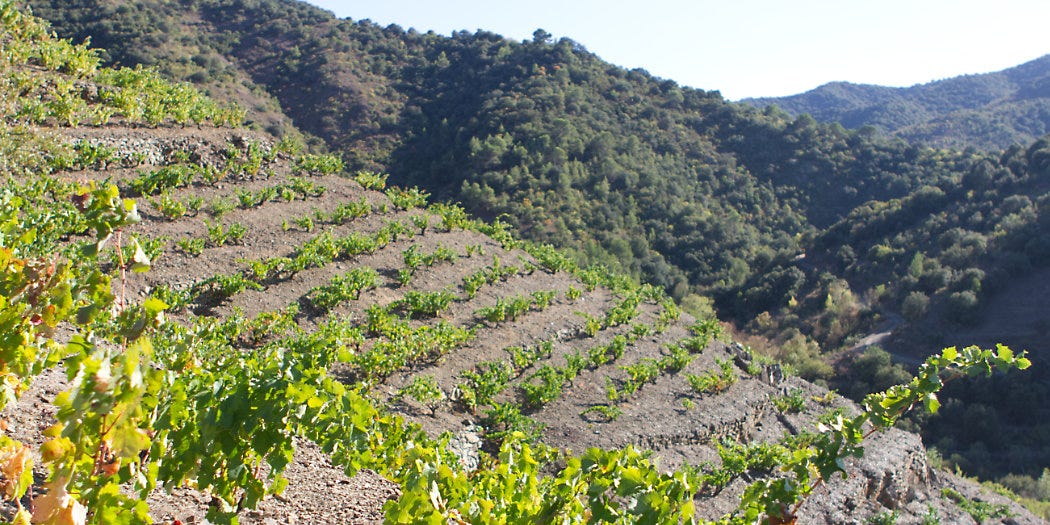
Don’t get me wrong, I’ve long-believed that in hotter climates, blended wines are almost always superior as they have balanced, well-thought parts making up a greater whole. And, when in the case of a region like Priorat, there are two core varieties, Garnatxa and Carinyena, that are joined together to create a blend and make what is one of the Holy Trinities of the wine world.
This requires further exploration.